Should you choose lounge seats or open seating in a premium hot tub?
The layout decides who floats, who fits, and whether the spa works for two people or six. It is the one specification a brochure cannot answer for you, and the one a wet test answers in ten minutes.
What a lounge seat gives and what it takes
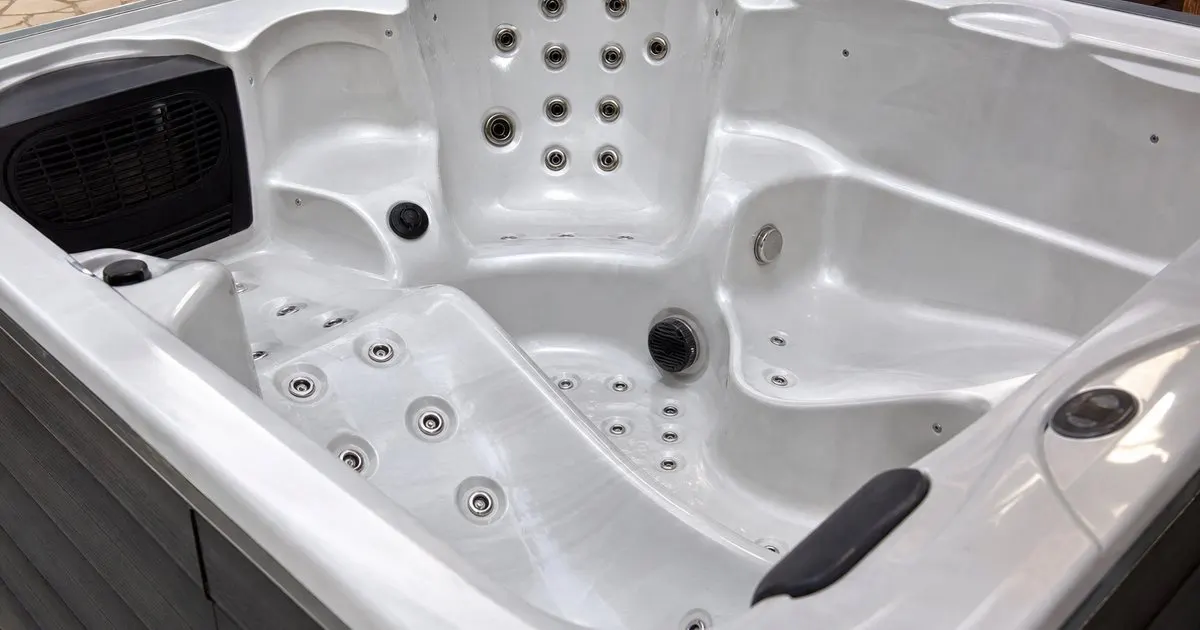
A lounge is a reclined, full-length seat that positions jets from the calves to the neck, and for a single user it is the most complete hydrotherapy position a spa offers. It is also the seat that decides the geometry of the whole shell. A lounge occupies the footprint of roughly two upright seats, and it fits a fairly narrow band of body sizes: shorter users tend to float up and out under jet pressure, while taller users find their knees bent and their shoulders below the neck jets.
The float problem is real and not a matter of technique. Buoyancy plus the upward push of strong jets lifts a reclined body, and the shells that manage it best use deeper contours, wrist and foot jets that anchor you, and carefully angled backrests. For two adults of similar height who mostly soak together, a lounge is often the seat they fight over. For a household with children, guests, or a wide range of heights, it can be the seat nobody quite fits.
Keep reading: How much difference is there between a hot tub and a swim spa?, Which shell material lasts longest in a premium outdoor hot tub?, What does energy efficient insulation really mean for a luxury spa?. See how Spaholm helps you a considered guide to luxury hot tubs and swim spas.
Open seating and why it hosts better
Open seating means every position is an upright seat, whether molded buckets, corner captain's chairs, or a bench. It seats more people in the same footprint, keeps everyone at conversational height, and lets each seat specialize: one with dense shoulder and neck jets, one deep therapy seat, one cooler and shallower seat for a break or for a child. Moving from seat to seat becomes a hydrotherapy circuit, which many owners find more satisfying than a single reclined position. Related: When does a swim spa make more sense than a full pool?
Depth variety is the detail to look for. Seats at different heights let a couple of different statures both sit with water at the shoulder, and a raised cool-down seat is used far more often than buyers expect. Ask the dealer for seat heights on the specification, not just seat count, and pay attention to footwell size; a cramped footwell makes six seats feel like four once six sets of legs arrive. Bench seating along one side adds flexibility for lounging sideways or for children.
Layout details the brochure leaves out
Beyond lounge or open, the details that shape daily use are unglamorous: where the entry step lands relative to the seats, whether the topside control panel sits next to the seat you will actually use, which direction the cover lifter folds and whether it blocks a view or a seat, and where the equipment bay sits, since the seat beside it hears the pumps most. Armrest height, seat width, and non-slip texture matter more after a year than the styling of the cabinet. Related: Why does a premium cover matter more than most hot tub buyers expect?
Jet count is the least useful number in the brochure. What matters is jet placement per seat and the pump capacity behind it, because a spa that spreads two pumps across sixty jets delivers a gentler massage in each seat than one that runs forty jets on the same power. Diverter valves let you direct flow to the seats in use, which is how a well-designed spa gives a strong massage to two people without upsizing the pumps. Ask which seats share a pump and whether the lounge can be isolated. Related: Why do jet configuration and pump power define the hydrotherapy experience?
How to decide with a wet test
Bring whoever will use the spa most. Sit in every seat with the jets on high and stay long enough to notice: whether you float, whether the neck jets hit your neck or the back of your head, whether your knees fit, whether the seat edge presses your thighs. Try the cool-down seat, use the steps, and operate the controls with wet hands. Spend ten full minutes in the lounge rather than thirty seconds, because the float tendency shows itself over time, not immediately.
A practical rule: two people of similar height with a therapy focus are well served by a lounge plus two or three seats. A family, frequent guests, or a wide spread of heights are better served by open seating with varied depths. When in doubt, open seating rarely disappoints, while a lounge that does not fit is a permanent regret occupying a third of the shell. Some models offer a shallower chaise-style seat as a middle ground, and if that appeals, test it under the same conditions.
- A lounge gives the most complete single-user hydrotherapy but occupies two seats' worth of shell and fits a narrow band of heights.
- Open seating hosts more people, keeps conversation easy, and lets each seat specialize by depth and jet focus.
- Seat heights, footwell space, control placement, and which seats share a pump matter more than total jet count.
- Wet test every seat with jets on high for several minutes; floating out of a lounge shows up over time, not instantly.

Julien Jimenez
Julien Jimenez is an independent software builder based in Paris. He designs, ships, and operates focused SaaS products for small businesses and independent professionals. Read the full author page.
Warm Water, Ready When You Are
A considered guide to luxury hot tubs and swim spas. Spaholm is built to help you put this into practice.
Compare spasMore from the Spaholm blog
How much difference is there between a hot tub and a swim spa?
Which shell material lasts longest in a premium outdoor hot tub?
What does energy efficient insulation really mean for a luxury spa?
Get the complete luxury hot tubs and swim spas guide
Our full buying guide, the price guide, and new research as we publish it. One email, no spam, unsubscribe any time.